The secret to vitality does not lie in imported superfoods or aggressive fasting regimes. It requires looking at the actual physiological gaps holding women back and learning how to master the foundational pillars of nutrition
Every few months, something new becomes either a miracle food or a hidden health disaster, depending on which corner of the internet you happen to be reading. Ghee is suddenly good again. Oats are now inflammatory. Fruit has too much sugar. Rice is the enemy. If you have stood in your own kitchen genuinely unsure whether the food your family has eaten for three generations is now working against you, you are not alone—and you are not being irrational. The noise around nutrition is genuinely overwhelming, and it is getting louder, not quieter.
The more useful question is not what the latest wellness trend recommends, but what Indian women are actually deficient in—and why those deficiencies persist despite the fact that Indian cuisine is, in many ways, nutritionally rich. When you look at national health data, the same three gaps appear consistently: iron, protein, and vitamin D. Not spirulina. Not collagen peptides. Just the basics.
1. Iron: The Quiet Epidemic
Iron deficiency is the most widespread and the most under-discussed health issue. More than half of Indian women between fifteen and forty-nine are anaemic according to the NFHS-5 survey—a figure that has barely shifted in decades despite public health campaigns. The symptoms are so common they have become invisible: persistent fatigue, difficulty concentrating, feeling cold when others are comfortable, and a general flatness that gets attributed to stress or personality rather than physiology.
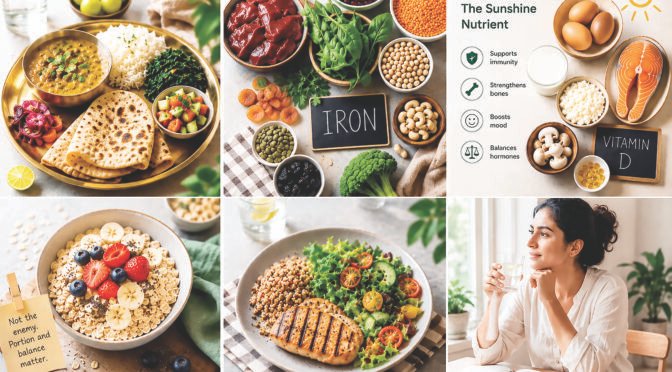
For non-vegetarians, liver, eggs, and lean red meat provide haem iron, which is the form the body absorbs most efficiently. For vegetarians, spinach, methi, rajma, chana dal, and tofu are reliable sources—but they need to be eaten alongside vitamin C to be absorbed properly. Try a squeeze of lemon over your dal, or a small piece of amla alongside your meal. One habit worth changing immediately is drinking tea or coffee within an hour of eating, as it actively blocks iron absorption. This single adjustment, made consistently, can noticeably shift iron levels within weeks.
2. Protein: Essential Architecture, Not Just a Gym Trend
Protein is the second gap, and it is arguably the most misunderstood. Protein is not just a gym supplement or a bodybuilder’s concern; it is the raw material for hormones, enzymes, neurotransmitters, and the repair of every cell in the body. Most urban Indian women—particularly those eating vegetarian diets or who are too busy to cook balanced meals—end up consuming diets that are heavily carbohydrate-based and protein-light.
The recommended daily intake for a moderately active adult woman is approximately 0.8 to 1 gram of protein per kilogram of body weight. For a woman weighing 60 kilograms, that means at least 50 grams of protein daily. To put that in perspective, a cup of cooked dal provides around 9 grams, while one egg provides 6. Most women are nowhere near hitting their target, and the hormonal and metabolic consequences accumulate quietly over the years.
3. Vitamin D: The Sunlight Paradox
Vitamin D surprises many people because India has sunlight year-round, leading to the assumption that a deficiency cannot be widespread here. Yet, it is. Estimates suggest that close to 80 percent of Indians are deficient in vitamin D, largely because modern lifestyles keep people indoors during peak sun hours, and because darker skin tones require longer sun exposure to synthesize adequate amounts.
Vitamin D is vital for immune function, mood regulation, bone health, and hormonal balance. A simple blood test can confirm a deficiency, and supplementation under medical guidance is usually the most practical solution.
————————————————————
Managing PCOS and the Myth of the Fruit Enemy
For women managing PCOS—and the numbers in urban India are significant, with some estimates suggesting one in five city-dwelling women is affected—diet becomes a more targeted conversation. The central issue in most PCOS cases is insulin resistance, and the dietary response to that is clear, even if it is not always easy to sustain.
The pillars of a PCOS-friendly diet include reducing refined carbohydrates, increasing fiber and protein at every meal, avoiding long gaps between eating followed by large meals, and choosing complex carbohydrates over simple ones. Fruit is not the enemy. Maida biscuits, white bread, and packaged snacks eaten between inadequate meals are the real problem.
The Failure of Wholesale Fad Diets
Fad diets deserve a direct response. Keto diets, which are built around Western food systems and Western body types, are difficult to sustain in Indian households and offer limited evidence of long-term benefit for Indian women with conditions like PCOS. Detox cleanses have no scientific basis. Furthermore, extended intermittent fasting without medical supervision can worsen hormonal irregularity in women who are already under stress. None of this means every popular diet trend is entirely worthless, but applying them wholesale to an Indian body, an Indian kitchen, and an Indian lifestyle without personalized guidance is rarely the right move.
Look Closer to Home
Women in Noida and Greater Noida have something genuinely valuable close at hand: local, seasonal produce from the mandis in areas like Surajpur and Sector Omega. A summer thali built around bottle gourd, bitter melon, seasonal greens, and dal is more appropriate for the Indian gut and more nutritionally complete than a smoothie made from imported powders and frozen berries.
Eating locally and seasonally is not nostalgia; it is, increasingly, what nutrition science supports. The best thing most women in this region can do for their health is stop chasing trends and start paying closer attention to what their own bodies actually need.