
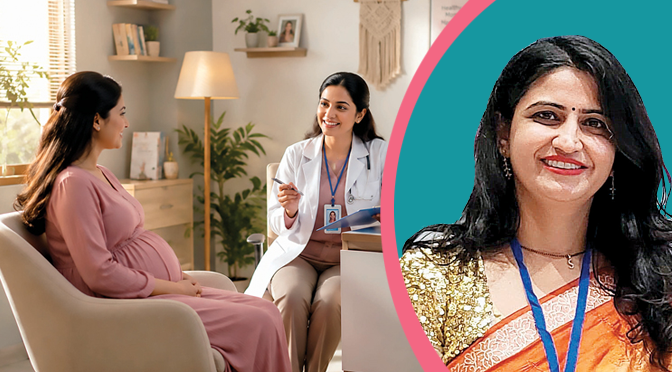
From combating morning sickness to securing essential nutrients, here is a practical, no-myth, guide to mindful eating for an expecting mother and her growing baby
A column by Dr. Parul Singhal
Let’s dispel some common myths that, in my opinion, cause unnecessary anxiety. Pregnancy is a magical phase in a woman’s life. Active exercises like walking, swimming, and antenatal yoga not only provide relief from backaches and improve sleep, but they are also beneficial for a healthy pregnancy and help manage weight gain both during pregnancy and the postnatal period. Currently, concerns regarding body image, combined with anxieties over routine antenatal checkups, are the most frequent issues women express. Over my years working as an obstetrician and gynaecologist here in Noida and Greater Noida, I’ve had the immense privilege of witnessing these shifts firsthand, patient by patient.
What is approaching does not need to be feared; instead, it should be welcomed and faced as peaceably as possible. There has been a quiet yet significant shift from striving to be the “perfect” mother to wanting to be a happy mother. Today’s woman is better informed, unafraid to ask questions, quick to seek help, and completely honest about sharing her challenges. She comes into my clinic not just with medical concerns but also with emotional ones, and she seems far less ashamed to do so than her mother or grandmother would have been. In my opinion, this open communication is one of the most positive changes I have seen.
Social media’s contribution to this transition has been a complicated mix. On one hand, it has forged supportive communities for expectant and new mothers that were previously nonexistent; on the other hand, it has opened up avenues for new anxieties, comparisons, and unrealistic standards. I regularly see patients who are worried about bodily changes during pregnancy—not because anything is medically wrong, but simply because they do not match what they see online. This body image concern, coupled with routine antenatal care, is the most common worry women share with me today. Weight gain, skin changes, stretch marks, and the shape of the abdomen seem to weigh women down immensely, primarily because the images around them do not reflect the true reality of a pregnant body.
This is precisely why I strongly advocate for antenatal classes and Lamaze sessions, many of which are available at local hospitals in Noida and Greater Noida. They accomplish what a typical clinic visit cannot due to a lack of time, allowing women and their partners to process information, voice queries in a pressure-free environment, and truly prepare themselves. Essential preparation for pregnancy, birthing, postpartum care, and newborn basics is covered in a comfortable, relaxed environment rather than an intimidating medical setting. I strongly encourage every couple in the area to attend at least a few sessions; I have witnessed firsthand the positive difference a supportive partner can make.
There are a few common misconceptions that, in my experience, cause unwarranted worry, and I want to address them directly.
• First: “Eat for two.” I hear this incessantly, but it is simply not true. While pregnant women do need to eat more, they do not need to eat twice as much as usual. Doubling up on meals results in unhealthy weight gain, which significantly increases the risk of gestational diabetes, birth complications, and postpartum weight retention. What you need is nutritious food in increased quantities, not larger meals.
• Second: Pregnancy as a resting phase. I am truly frustrated by this misconception because the reality is quite the opposite. For a healthy pregnancy, active exercise through walking, swimming, or antenatal yoga not only reduces backaches and improves sleep, but it also helps manage weight gain and aids postpartum recovery. I have seen the marked difference this makes in my patients’ recovery times; women who exercise actively yet moderately throughout pregnancy usually bounce back much more easily after childbirth.
• Third: Sex during pregnancy is unsafe. This is another misconception that many women are too shy to bring up, but it is far from the truth for an uncomplicated pregnancy. While certain situations call for caution and abstinence, your doctor can clarify those for you. Otherwise, rest assured that there is nothing to fear. The emotional distance and psychological barriers that avoiding intimacy can create during such a vulnerable time are entirely unnecessary.
Even after childbirth, the importance of the maternal transition cannot be overstated. The post-delivery period, especially during lactation, is both physically and emotionally challenging in ways that often surprise women. Natural as it may be, breastfeeding does not always come easily, and the expectation of perfection can be overwhelming. Hormonal shifts after birth can manifest as mood swings, anxiety, and sometimes, postpartum depression. While your body recovers from an incredible feat, it is simultaneously tasked with nourishing your newborn. Maternal health does not end at delivery; it extends long into the postpartum period and is of paramount importance.
Through all of this, family support is vital. A pregnant woman with the full backing of her family—both emotionally and physically—experiences this period of transition and adaptation very differently than a woman going through it alone. Family provides a steady pillar of strength, keeping her balanced through the pain, anxiety, uncertainties, and recovery. In our communities across Noida and Greater Noida, where joint families and extended support systems are still prevalent, this is one of the greatest advantages a mother-to-be can have. I advise families to offer active and consistent support, in both big and small moments.
For all first-time mothers-to-be reading this, I have one thing to say: whatever you are feeling right now—the apprehension, the self-doubt, the fear of not doing it right—is exactly what every mother before you has felt. It is neither a reflection of your preparedness nor a sign that you won’t be brilliant at this. Acknowledge your anxieties and gently set them aside. What awaits you should not be dreaded, but rather embraced and experienced with as much calm as you can find within yourself. You will not be perfect—no mother is. But you will be there, and you will be yourself. And that is exactly enough.
Motherhood has certainly changed, and in most ways, it has changed for the better. Today’s woman expects more, demands more, and accepts less silent suffering. It is our duty—and indeed, the duty of every healthcare professional in this region—to rise to this change with the care and honesty it deserves.
Dr. Parul Singhal is a Gynecologist based at Elixir healthcare clinic, Noida. She can be reached at 95994 42689.