
From the first ignored symptom to the waiting room chair, what does it actually feel like to become a patient? A day-in-the-life account
It begins, almost always, with a choice to overlook. Not the dramatic, red-alert kind, but the small whisper: a warm forehead attributed to a “lack of sleep”; a vaguely achy abdomen blamed, more easily, on the street-corner samosa eaten the day before than on something perhaps… more.
Typically, there is that moment when you tell yourself nothing is really “starting”, even as something most definitely is. It happens in the stillness of a mundane stretch of the day, when you negotiate with your body over whether it is really worth complaining.
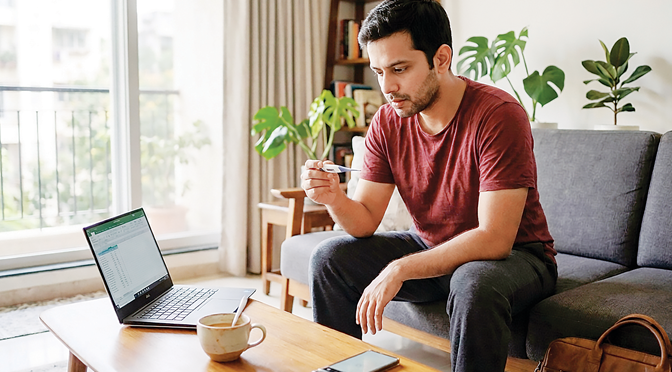
Eventually, by afternoon, these negotiations generally lose currency. The head gets heavier; your posture slouches in a way it hasn’t since childhood. Sitting at your desk, whether at home or in a home office in a city like Gurugram or Noida, begins to involve a subtle resistance that a well person wouldn’t recognise. Then comes the familiar fatigue of monsoon sickness, a kind of tiredness that doesn’t knock on the door but instead leaches into the day, making every mundane step require just a little more energy than before.
Still, most people press on through this phase. There’s a distinct, almost comical inconvenience to admitting that you are sick: there are meetings to reschedule, small humans to contend with, and that already onerous commute that consumes two to three hours—not to mention another appointment at an already overused clinic.
In the afternoon, if nothing changes, the next stage begins: domestic remedies.
“We’ll make kaadha,” someone says. A spouse or parent suggests the eternal remedy of resting and letting it pass.
There is no great foolishness in that. Most minor viral infections, as doctors point out, do get better on their own with time and a little rest and care. However, this also tends to be the part of the day when the decision is discreetly pushed back by another six hours, and then another six hours, until a same-day appointment becomes a visit 24 hours later.
The incident that actually prods most people to consider seeing a doctor is rarely dramatic. Often, it’s the sixth hour of a borderline fever that refuses to subside; a stomach churning with pain or nausea that refuses to ease even after an entire day of nothing but rice and water; or a cough that has now disrupted sleep.
And this is where the second, more logistical problem starts: getting yourself—or someone else—to a clinic, a problem anyone living in the NCR knows all too well.
This is where the monsoon comes with a heavy, very tangible dose of misery.
A 15-minute car journey now takes 45 minutes, an hour or more. The one auto that the society invariably seems to produce vanishes into thin air when two families in the neighbourhood have the same idea—to go to the doctor. An already sick person now has the extra burden of navigating flooded stretches of road and delayed Uber or Ola rides that have a habit of repeatedly cancelling on you.
Many doctors practising at NCR clinics say this part of the journey for patients is usually unspoken, but it truly impacts how soon they seek care.
“Sometimes, a long and arduous commute by itself can be a reason for a patient to put off seeing us for another day, even if they understand that this is not advisable,” they say.
Then there’s the waiting room itself, fuller than usual and quiet in its own specific way during the monsoon. There is an uncanny shared empathy between patients waiting there—the understanding that everyone is present for some variation of the same seasonal ailments: fever, an upset stomach, an irksome cough, an unexpected rash.
It’s strangely reassuring, patients later say, to know you aren’t the only body that has decided to act erratically this week.
The consultation, once you finally manage it, is often briefer than the anticipation.
A few questions are asked about the onset of symptoms, any home remedies attempted, and whether others at home have similar complaints. Temperature, throat and whatever else is relevant are checked.
More than half the time, the diagnosis is disappointingly banal: a viral bug requiring only rest and fluids; a gastrointestinal ailment that the rest of the family has somehow avoided; or, rarely, and only if the symptoms suggest it, a blood test for dengue or typhoid.
What patients often describe afterwards isn’t exactly relief, but a sense of permission.
Permission to finally doze off without the nagging background hum of “Is this really so bad?”
Permission to tell the office, unequivocally, that those two days off are mandatory.
The diagnosis is almost never the dramatic point of the journey. The drama, if there is one, resides in the prelude—the long hours of self-doubt, the commuter’s slow journey over waterlogged roads, the eventual surrender to the fact that waiting it out is no longer an option.
The ending is, almost universally, mundane and predictable: a prescription filled at the pharmacy, a lighter load upon one’s chest, and a private promise to oneself that next time will be different.
Whether the promise holds true for the following year’s season of illness remains an utterly irrelevant question.
BLURB
“It’s strangely reassuring… to know you aren’t the only body that has decided to act erratically this week.”
2.
“The consultation, once you finally manage it, is often briefer than the anticipation.”
3.
“The drama, if there is one, resides in the prelude—the long hours of self-doubt, the commuter’s slow journey over waterlogged roads.”