A pediatric expert’s advice on postpartum mental health and the everyday habits that shape a child’s future
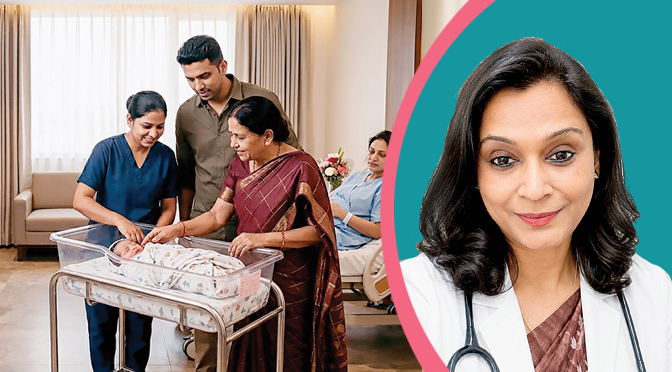
Columnist: Dr. Aparna Chakravarty
Over the past twenty years I have spent sitting across from new mothers in my clinic, I have realized something that is always true, yet no medical textbook can prepare you for. A mother will come in with an endless stream of questions about her baby—whether he or she is eating well, why they aren’t sleeping, or why they are developing a particular rash. The list is endless. But suddenly, amid all the medical answers, a thought strikes me: when did anyone last ask you, Mom, about your own well-being?
This post is not just about babies; it is about moms as well. In all my years of practice, I have come to understand that the two go hand in hand. There is no denying that a mother who is totally exhausted, anxious, and sleep-deprived has little left to give her baby. This is the reality. Yet, in a world overflowing with advice on how to handle the first few months of a baby’s life, the mother’s health routinely gets pushed to the back burner.
Let’s talk about something that comes up constantly in my practice: breastfeeding. Almost every woman who comes to me is convinced that because it is natural and the best thing for her baby, it should happen effortlessly. While this is true for many mothers, it is certainly not the case for everyone. When reality falls short of expectations, it can be deeply discouraging. The most common difficulties include latching issues, low milk supply, sore or cracked nipples, and engorgement. These are common medical hurdles, not signs that something is fundamentally wrong with you or your body. Solutions exist for each of these challenges, and consulting a lactation specialist can make a world of difference.
The second major hurdle is sleep deprivation, which is almost always underestimated. New parents expect to be tired, but they rarely anticipate the profound exhaustion that comes from weeks of disrupted sleep. A lack of adequate sleep impairs your cognitive function, immune system, emotional balance, and postpartum recovery hormones. So, when a patient tells me she hasn’t slept properly in six weeks, I don’t just hand her a brochure. Instead, I ask: Who is taking care of you? Do you have support? Is anyone helping with the night shifts? Too often, the answer is no.
Postpartum mental health is a topic I believe must be discussed openly, especially in societies where psychological distress still carries a heavy stigma. Postpartum depression is entirely distinct from the “baby blues”—those temporary feelings of sadness and vulnerability that many women experience during the first week after childbirth. While those feelings tend to fade naturally, postpartum depression lingers. It is a serious condition affecting 10 to 15 percent of new mothers. In India, the actual number is likely much higher due to under-reporting. Symptoms can include profound sadness, a lack of bonding with the infant, feeling unable to care for your baby, unrelenting anxiety, and occasionally, intrusive thoughts. If you experience any of these symptoms, please seek professional medical guidance.
Over the years, I have realized that some of the most vital conversations I have with mothers aren’t about treating illness, but about helping children stay healthy in the first place. In a world overflowing with opinions from relatives, social media, and parenting groups, it can be difficult to discern what truly matters.
If I had to distill the factors that make the greatest difference in a child’s health and development, I would point to five pillars: sleep, screen time, vaccinations, developmental check-ups, and healthy eating. These may sound basic, but science shows that these everyday habits shape a child’s future far more than we realize.
Let’s start with screen time.
I completely understand the realities of modern parenting. Sometimes you just need ten minutes to finish a meal, answer a phone call, or catch your breath, and a screen feels like a lifesaver. However, as a pediatrician, I would be doing you a disservice if I didn’t share what the research consistently shows.
During the first few years of life, a child’s brain develops at an extraordinary pace. Young children learn language not from devices, but from human interaction—conversations, eye contact, facial expressions, stories, songs, and play. Excessive screen exposure during early childhood is linked to language delays, attention difficulties, and poor sleep quality. That is why I encourage parents to keep screens away from children under two (except for video calls with loved ones) and to strictly limit screen time for older preschoolers. The absolute best educational program is still a parent sitting on the floor talking, reading, and playing with their child.
Then there is sleep—perhaps the most underestimated medicine of all.
Many parents stress over what their child eats but rarely consider whether they are getting enough sleep. Yet, sleep is exactly when the brain organizes memories, growth hormones are released, and the body restores itself. Chronically sleep-deprived children are far more likely to struggle with attention, behaviour, learning, and even maintaining a healthy weight.
When I see an irritable toddler or a school-aged child struggling to concentrate, my first question is often, “How many hours does your child sleep?” Very frequently, the answer explains more than any laboratory test ever could. A regular bedtime routine, a screen-free bedroom, and consistent sleep schedules can work wonders for a child’s well-being.
Vaccination is another subject close to my heart.
I have noticed that many parents today are bombarded with conflicting information from social media, family WhatsApp groups, and the internet. My advice is simple: trust science and trust your pediatrician. Vaccines are among the greatest achievements in medical history, protecting children from diseases that once caused severe disability and death. The recommended immunization schedule is not arbitrary; it is carefully designed based on decades of scientific evidence to protect children precisely when they are most vulnerable.
Every time a child receives a vaccine on schedule, their parents are making a vital investment in that child’s long-term health.
I also strongly encourage mothers never to miss routine developmental assessments.
A child may appear perfectly healthy and still have subtle difficulties with speech, communication, hearing, learning, or social interaction. Because most developmental concerns are not obvious early on, regular well-child visits are crucial. They allow us to monitor growth and catch potential issues early, when intervention can make the greatest difference.
Many parents tell me later, “I thought he would outgrow it.” Sometimes children do; often, they do not. In pediatrics, early recognition can completely change the trajectory of a child’s life.
And finally, let us talk about food.
The healthiest diet is usually the least glamorous one. Children do not need expensive supplements, exotic superfoods, or “miracle” products. Instead, they need a balanced diet filled with fruits, vegetables, pulses, whole grains, dairy products, and home-cooked meals whenever possible.
I know mealtimes can turn into a battleground—toddlers refuse vegetables, school-aged children demand packaged snacks, and teenagers skip meals entirely. However, healthy eating habits aren’t built overnight; they are established through consistent family routines. Children learn far more from watching what their parents eat than from what they are told to eat.
When mothers ask me for the single best thing they can do for their child’s future, my answer is never a medicine or a supplement. It is creating a home where children sleep well, eat well, play actively, receive their vaccines on time, and are nurtured to reach their full potential.
Parenting has never been about perfection; it is about making small, thoughtful choices every day. From my experience, mothers do this far better than they ever give themselves credit for.
My final, and perhaps most important, recommendation is this: listen to your instincts. Only you can truly know when something is amiss with your child. Trust me, an intuitive mother who feels something is wrong is one of the most accurate diagnostic tools I have ever encountered.
Stay healthy and happy—because nothing beats a happy, healthy mom for a baby.
Dr. Aparna Chakravarty is a pediatrician and infectious disease consultant at Amrita Hospital, Faridabad. She can be reached at 9910995545.