
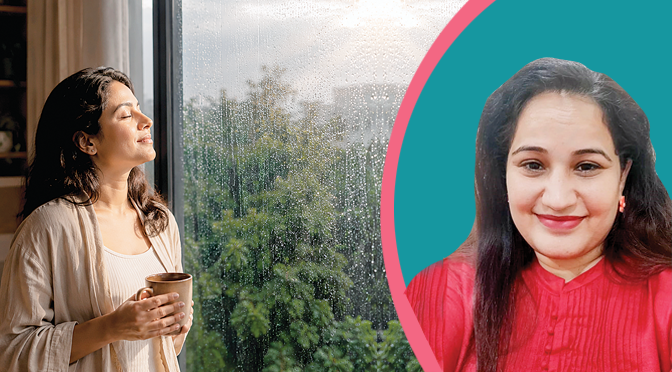
Embracing and Enduring the Monsoon
Columnist:Dr Jaspreet Kaur
We are welcoming the monsoon season—a period of celebrations, festivals, worshipping, relief from the summer heat, and enjoying favourite foods. The monsoon brings a smile with the music of raindrops and the fragrance of the soil when the first drops of water fall on arid earth. It is almost mandatory to feel nostalgic with this fragrance. Langston Hughes nicely sums it up:
“Let the rain kiss you, let the rain beat upon your head with silver beads, let the rain sing you a lullaby.”
However, there are individual differences in people’s responses to the weather. Rain doesn’t just fall on you; it gets inside you. Grey skies do not bring a smile and happiness to everyone. When the sky lacks the sun for long hours or days, some faces become sad and filled with despair. The rain psychology states that these clouded skies trigger a real hormonal shift, leading to a low mood, feelings of loneliness, or even overt depression requiring intervention.
Let us try to understand which camp you fall into, why, and what should be done.
Identifying the Signs
Do you feel sluggish and slow in the rainy season? It feels hard to get out of bed in the morning. It is difficult to focus on work as you feel down in the dumps, and it feels harder to stick to a healthy diet plan and control your weight. If yes, then it is a matter of concern.
Distinguishing Normal Mood Dips from SAD
Not every low mood is depression. Normal mood dips triggered by a temporary emotional state, fatigue, arguments with someone, work- or study-related stress, or a breakup usually get resolved after some time by taking a holiday break, hanging out with friends, or having a workout session. These mood dips do not persist for long and do not hamper anybody’s ability to function.
When the symptoms last longer than two weeks and persist throughout the day, then a diagnosis of SAD (Seasonal Affective Disorder) can be considered. SAD can be a recurrent depressive disorder or a bipolar mood disorder with seasonal variations. In simple words, these episodes of disturbed mood are affected by low sunlight, such as during the rainy season or in winter, where it is also referred to as the “winter blues”. Mood improves when the season changes; people feel they are at their best in summer and at their worst in winter and the monsoon.
Typical signs and symptoms that seasonal affective disorder patients exhibit include:
- Low mood
- Loss of interest in pleasurable activities
- Excessive sleep
- Increased appetite
- Weight gain
- Difficulty concentrating
- Suicidal thoughts
The episodes with these symptoms occur at least twice per year for the last two years. Seasonal depressive episodes clearly outnumber non-seasonal episodes. The younger age group, females, individuals who mostly live indoors, and those with a family history of mood disorders are at a higher risk than the general population.
The Biochemistry: Why Does This Happen on Less Sunny Days?
Sunlight exposure plays a crucial role in regulating mood through complex interactions with our body’s biochemistry and neural pathways. “Nature’s clock sets our biological clock.” These changes in our body and mind are mediated through circadian rhythms, neurotransmitter production, and the activation of specific brain areas.
1.Melatonin Regulation: When daylight enters our brain through the retina of the eyes, it sends a signal to a specific brain centre, the Suprachiasmatic Nucleus (SCN)—which is the body’s master biological clock—to reduce the production of melatonin. Melatonin is a sleep hormone released in the dark or in insufficient light. That is why, during winter and on cloudy days, melatonin production becomes imbalanced, leading to lethargy and hypersomnolence during the day, and insomnia at night.
2.Happy Mood Hormones: Sunlight exposure enhances the production and availability of “happy mood” hormones—namely serotonin, norepinephrine, and dopamine—through various pathways. Reduced sunlight causes a drop in serotonin. Positron Emission Tomography (PET) studies have revealed altered serotonergic neurotransmission in SAD patients. Apart from serotonin, dopamine levels—which make you feel energetic, enthusiastic, and happy—are also reduced in specific brain regions.
3.Oxidative Stress and Vitamin D: Oxidative stress and inflammation are other causes of depression and anxiety. Vitamin D is a very good antioxidant. Eighty per cent of vitamin D is synthesised by our skin when exposed to the UV rays of the sun, and 20 per cent comes from the diet. Vitamin D deficiency exacerbates the symptoms of depression and anxiety, while also affecting cognition. The immunomodulator properties of vitamin D make it a neuroprotective agent. Vitamin D is important in maintaining the vitality of neurons that produce serotonin, dopamine, and noradrenaline, thereby playing an indirect but important role in depression.
Intervention and Treatment
When you or your loved ones struggle with these features of depression and anxiety, always acknowledge and support them. If it is clearly a seasonal mood disorder but with mild intensity, then talk to your go-to person. Start daily sun exposure in the morning for 15–30 minutes; even on a cloudy day, some daylight will still help.
On the persistence of symptoms, or in the case of moderate to severe symptoms, never hesitate to consult a psychiatrist. By severe symptoms, I mean a disturbed family and social life, job or financial losses, poor control over sleep and weight, and, last but not least, suicidal thoughts.
The treatment may include:
1.Light Therapy: Where the patient sits in front of a specific light therapy box for 30–120 minutes a day. Improvement is typically seen in one to four weeks.
2. Antidepressants: If light therapy is not effective, antidepressants which enhance levels of serotonin, dopamine, and norepinephrine may be used.
After the remission of the episode, both the patient and the therapist should remain vigilant about the mood shifting to a manic phase. Treatment should be carefully monitored.