
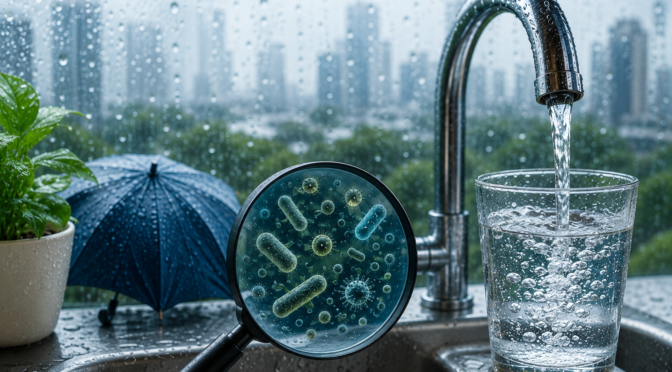
We rarely think about what comes out of the tap until someone falls ill and the doctor asks the inevitable question: “Did you drink the water?” During the monsoon, this risk escalates dramatically. Rising groundwater tables across the NCR and ageing municipal pipelines mean sewage can easily infiltrate the water supply. Safeguarding your family does not require hours of work—just a sharp, 20-minute audit of the system you usually ignore.
1. The Sight and Smell Test
Start with a simple sensory check. Fill a clear glass and hold it up to the light. Is it cloudy? Does it have a distinct brown colour, or sediment settling at the bottom? Next, check the scent. While a faint chlorine smell is acceptable, musty or sulphur-like odours are immediate red flags. If your water looks or smells different than it did a month ago, monsoon runoff or pipeline damage is the likely culprit.
2. Inspect Your Storage
Even purified water will make you sick if it is stored in a contaminated environment. Overhead tanks are easily neglected and typically only cleaned once a year. However, during the monsoon, leaves and debris frequently breach them. If your tank has not been cleaned in the last six months, now is the time to act. Do not forget the daily jugs or bottles you use for boiled water; unhygienic containers will compromise otherwise safe water.
3. Audit Your Filters
RO and UV filters are standard in NCR homes, but without proper maintenance, they can do more harm than good. If you cannot remember the last time the cartridge was changed, assume it is overdue. Additionally, understand your filter’s limitations: RO systems handle dissolved solids well, but they are not always effective against bacteria. When in doubt, consult your service technician.
The 20-Minute Breakdown
If stomach upsets become a recurring pattern rather than an isolated incident, your water is the prime suspect. Local doctors see a spike in these cases every monsoon season. You can protect your home by spending just 20 minutes investigating:
- 10 minutes checking the overhead tank.
- 5 minutes inspecting your storage containers.
- 5 minutes verifying the filter’s condition.
If anything seems off, get a professional water test done immediately. The rainy season does not have to be a period of anxiety. By checking the overlooked parts of your system, you can keep your drinking water safe. If anyone is already showing symptoms, skip the guesswork and consult a doctor right away.